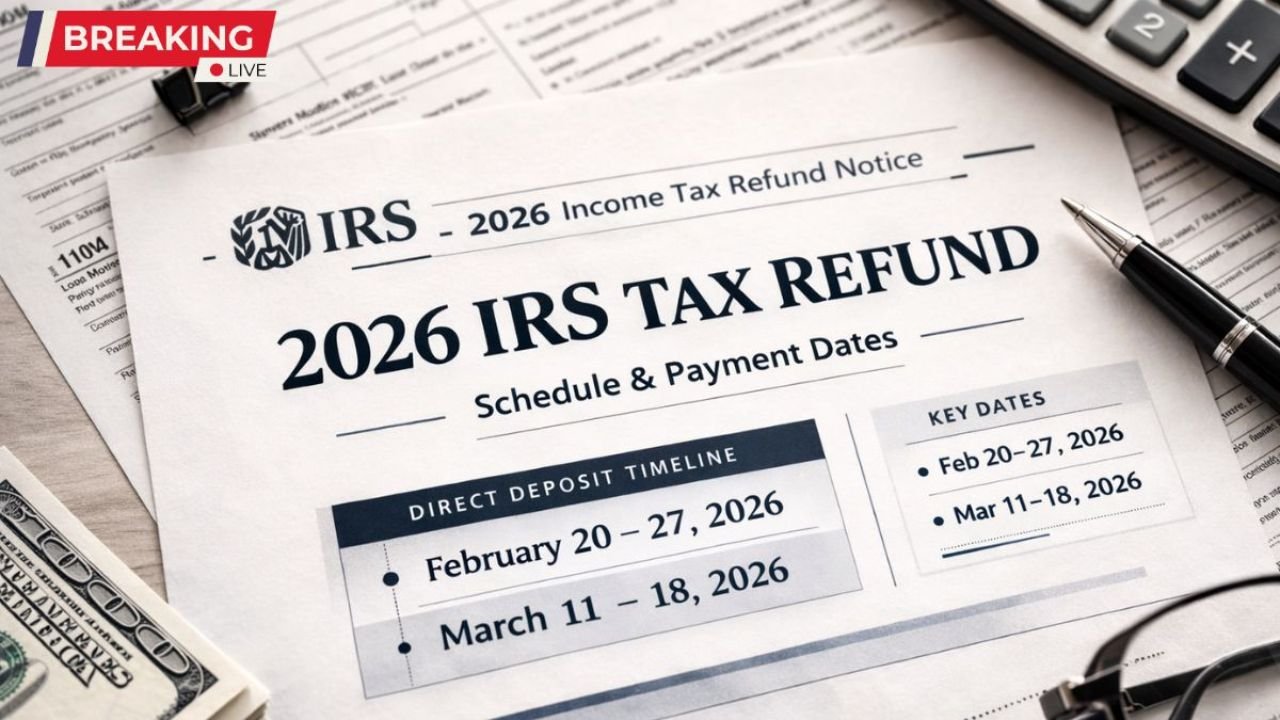
With millions of 2025 income tax returns already submitted, attention now shifts to one pressing question: when will refunds arrive?
For many households, a federal tax refund is not simply a financial bonus. It can help eliminate high-interest credit card balances, strengthen emergency savings, fund investments, or ease monthly cash flow pressures. Because refunds are issued individually — not in a single nationwide payout — understanding the processing timeline is essential for realistic planning.

Although there is no guaranteed calendar date for every taxpayer, refunds generally follow a structured process administered by the Internal Revenue Service. Knowing how that process works can reduce uncertainty and help you manage expectations with confidence.
Why There Is No Single Refund Date
One of the most common misconceptions during tax season is that refunds are issued according to a fixed public schedule. In reality, your refund timeline depends primarily on when your return is officially accepted — not when you prepared or submitted it.
Acceptance occurs when the IRS receives your return and confirms it has passed initial system validation checks. These checks verify formatting, identification numbers, and basic accuracy. Once accepted, the refund clock effectively begins.

From that point, processing time varies based on filing method, accuracy, and whether additional review is required.
The Typical 2026 Refund Processing Timeline
For most taxpayers who file electronically and encounter no complications, refunds are commonly issued within approximately 21 days after acceptance.
This three-week estimate represents an average, not a promise. Some refunds are processed more quickly, particularly early in the filing season. Others may take longer depending on specific return details.

The IRS generally follows three primary stages:
1. Return Received
The agency confirms that your return has been successfully submitted and entered into the system.
2. Return Reviewed
Income, credits, and deductions are verified against official records. Automated systems handle the majority of returns efficiently.
3. Refund Approved and Sent
Once approved, the refund is scheduled for payment via direct deposit or mailed check.
Understanding these phases helps clarify why timing can differ even among taxpayers who filed on the same day.
Electronic Filing vs. Paper Returns
Your filing method significantly influences how quickly funds arrive.
Electronic Filing With Direct Deposit
E-filing combined with direct deposit remains the fastest and most reliable approach. Electronic returns move directly through automated processing systems, reducing manual handling and minimizing potential delays.
When direct deposit is selected, funds are transferred directly to your bank account. Many financial institutions make deposits available within one business day of receipt.
For taxpayers who prioritize speed and efficiency, this method consistently delivers the best results.
Paper Filing and Mailed Checks
Paper returns must be physically opened, sorted, reviewed, and manually entered into the system before processing begins. This additional handling can extend the timeline by several weeks, particularly during peak filing periods.
Choosing to receive a paper check instead of direct deposit adds further delay due to printing and mailing time. Postal delivery schedules can also introduce variability.
Common Reasons Refunds May Be Delayed
While most returns are processed without issue, certain factors can slow down the approval process.
Errors in Personal Information
Incorrect Social Security numbers, misspelled names, or outdated addresses can trigger review procedures.
Income Mismatches
If the income reported on your return does not match information provided by employers or financial institutions, processing may pause until discrepancies are resolved.
Incorrect Bank Details
Entering an incorrect routing or account number can prevent direct deposit from completing successfully.
Identity Verification
Fraud prevention safeguards sometimes require additional identity confirmation. These reviews are designed to protect taxpayers but can temporarily extend timelines.
Certain Tax Credits
Some refundable credits are subject to enhanced verification requirements. While these measures promote compliance, they may delay refund issuance.
Carefully reviewing your return before submission significantly reduces the risk of encountering these delays.
How to Track Your Refund Status
Taxpayers can monitor progress using the official “Where’s My Refund” online tool provided by the IRS. The system typically updates once per day and displays one of three statuses:
- Return Received
- Refund Approved
- Refund Sent
You will need your Social Security number or ITIN, filing status, and exact refund amount to access this information.
Relying on official tracking tools is especially important during tax season, when misinformation and fraudulent communications tend to increase.
Financial Planning While You Wait
Rather than relying on an exact deposit date, consider incorporating flexibility into your financial planning strategy.
If you anticipate using your refund for major expenses, avoid committing funds before they are officially approved. Maintaining a short-term cash buffer can prevent disruption if processing takes longer than expected.
Some financially savvy households also review their withholding strategy after receiving a refund. If your refund is consistently large, adjusting paycheck withholding may improve monthly liquidity instead of waiting for a lump sum once per year.
What to Expect for the Remainder of the 2026 Season
The 2026 tax season is following a familiar structure:
- Filing opened in late January
- Most electronic refunds are issued within about three weeks of acceptance
- Paper returns require additional processing time
- Direct deposit remains the fastest payment option
While no single date applies to everyone, understanding the system provides clarity and control.
Final Thoughts
Waiting for a tax refund can feel uncertain, but the process itself is methodical and predictable when viewed through the right lens. Acceptance date, filing method, and return accuracy are the primary factors that determine timing.
Electronic filing combined with direct deposit offers the most efficient path. Reviewing your information carefully before submission minimizes the risk of delays.
With realistic expectations and a strategic financial plan, your 2026 tax refund can become a powerful component of your broader wealth management approach.
Disclaimer: This article is for informational purposes only and does not constitute tax, legal, or financial advice. Refund timelines vary based on individual circumstances and official processing procedures. Always consult official IRS resources or a qualified tax professional for guidance specific to your situation.